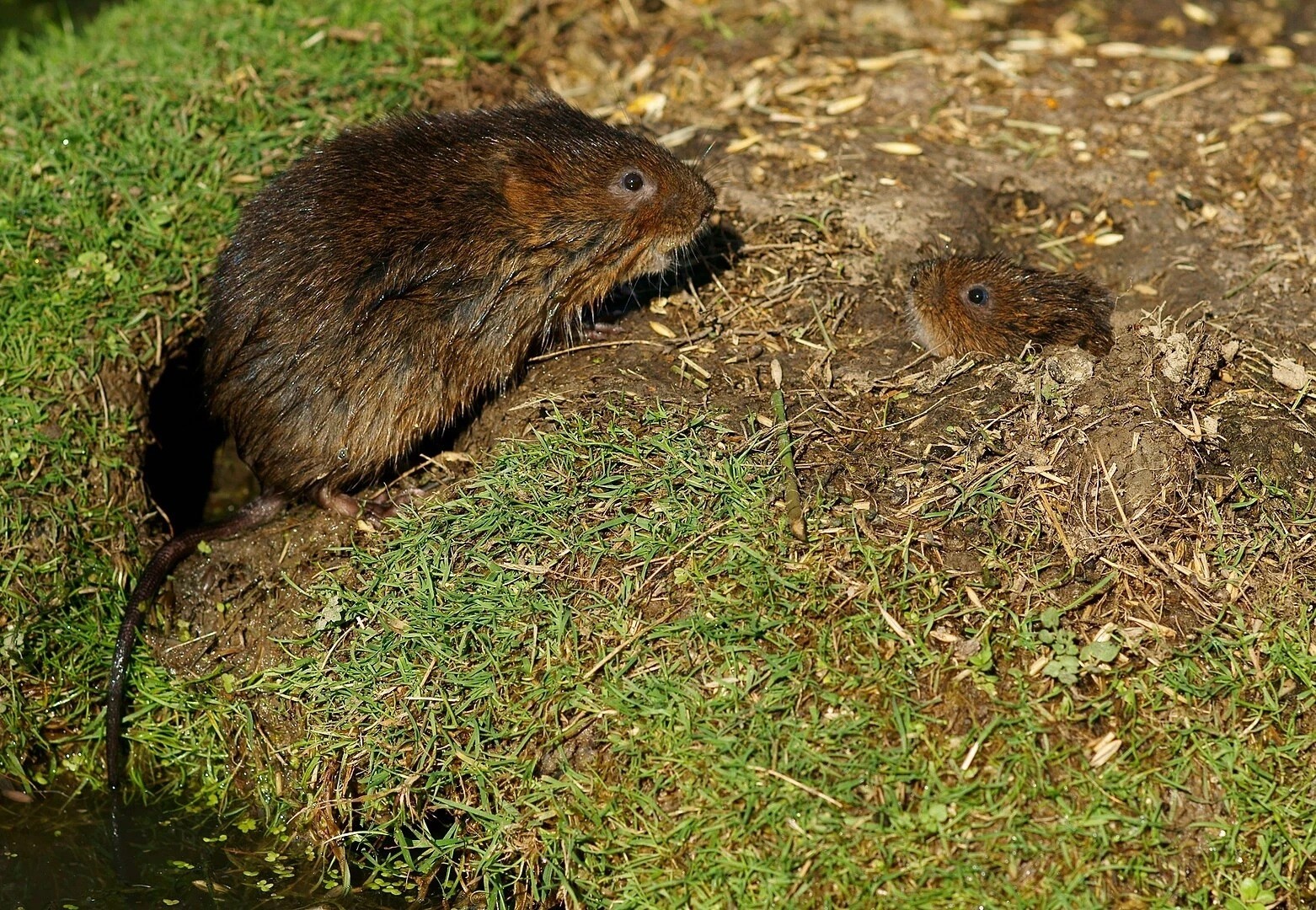
River Thame Conservation Trust’s volunteer monitoring team has confirmed the presence of Britain’s fastest-declining mammal, sparking hope for the species’ recovery in the catchment.
Water voles have been recorded in the River Thame catchment for the first time in decades, after River Thame Conservation Trust volunteers captured video evidence of the endangered species at two sites: one on the River Thame near Chearsley and another on the Chalgrove Brook in Stadhampton.
The footage, gathered using motion-sensor wildlife cameras placed across the catchment, was part of the Trust’s long-running monitoring project to detect signs of water voles and other key river species. Dedicated volunteers have been retrieving and reviewing thousands of clips, and their recent findings mark a hopeful sign of recovery for a species that has disappeared from much of the UK’s riverbanks.
Hilary Phillips, River Thame Conservation Trust, said:
“It’s a really fantastic affirmation of all the hard work by volunteers and landowners that our combined efforts are making a difference. There are still some small populations of water vole hanging on, and as with other rare species, we only know they’re still here if we put the effort in to look. These findings remind us how important it is to protect and improve river and floodplain habitats, so we don’t lose any more of the precious wildlife that depends on them.”
The first sighting came in the form of a dramatic video clip from the River Thame near Chearsley, showing a heron on the riverbank catching and eating not one but two water voles. While the footage was not easy to watch, it was also an exciting discovery, evidence of previously un-detected water voles in the Thame catchment.
Shortly after this, a different volunteer captured footage of a water vole swimming away from a mink monitoring raft on the Chalgrove Brook, confirming that at least one animal – but hopefully more - is alive and active in the catchment.
Paul Jeffery, RTCT volunteer and Oxon Mammal Group Treasurer, said:
“We deployed a trail camera by a mink raft along one of the Thame tributaries, which recorded video clips of various animals as they passed by. Trawling through the hundreds of clips, one by one, reveals a story of survival and new life. Regular visitors included a brown rat, wood mice and two otters. But one evening, a thousand clips later, I stopped… what was that? The face was more blunt than a rat’s, the ears and eyes not quite right. Confirmed the next day,it was indeed a water vole, moving upstream at 1am. It brings real hope that water voles are still clinging on and may one day repopulate the whole river system with our continued help.”
Herons area natural part of Britain’s riverside ecosystems, and their presence alongside water voles signals that the river is once again able to support a healthy, functioning food web. Water voles are a keystone species: their feeding and burrowing create dynamic riverbank habitats that support amphibians, birds, and invertebrates, while improving soil structure and vegetation diversity.
Water voles (Arvicola amphibius) were once a common sight along Britain’s rivers, streams and wetlands. However, their numbers have crashed by more than 90% since the 1990s, and they have vanished from 94% of former sites, making them one of the fastest declining mammals in the UK.
In the River Thame catchment, the last confirmed records of surviving water voles date back to the early 2000s, but populations were known to be dwindling at that time. In an attempt to boost their numbers, a reintroduction effort was carried out near Cuddesdon and Chiselhampton in 2006. Follow-up surveys in the 3 years after that release found no evidence that the released water voles had survived, and predation by mink was thought to be the culprit. It is not known whether the recently discovered water vole was from the reintroduced voles or the remnants of native populations (the sightings were a considerable distance from the 2006 reintroduction site). Nonetheless, their presence marks a remarkable and hopeful moment for local biodiversity.

Since 2023,River Thame Conservation Trust has been working in partnership with the Berkshire, Buckinghamshire and Oxfordshire Wildlife Trust (BBOWT) to deliver a coordinated American mink control programme across the Thame catchment, as part of the wider Natural England Species Recovery Programme funded Dots project. This landscape-scale approach is designed to remove one of the biggest barriers to water vole recovery and help restore a balanced wetland ecosystem. project.
Dr Merryl Gelling, a leading specialist in water vole conservation and an expert advisor to the project, said:
“Invasive American mink were first recorded as breeding in England in the 1950s, and since then, this wonderfully adaptive species has been recorded throughout the UK. The smaller females are perfectly adapted to predate water voles on land, into their burrows and in water, leaving water voles with no safe refuge and meaning that entire colonies have been lost. By controlling mink with an aim to eradicate them from the UK, so any small, remnant populations that we were unaware of have a chance to bounce back.”
During the first nine months of trapping, most of the mink captures occurred early on, followed by a sharp drop in captures, an encouraging sign that the programme is successfully reducing mink numbers across the catchment. Recent months have seen very few detections, giving conservationists confidence that the sustained, joined-up effort is working. However, effective invasive species management requires ongoing, long-term action across large areas to prevent mink from moving back into the Thame from neighbouring catchments. Maintaining this momentum depends on continued support and funding for the volunteer network, expert guidance, and strong relationships with landowners. River Thame Conservation Trust and BBOWT remain committed to this work and are planning for its continuation, ensuring efforts on the River Thame stay aligned with wider regional initiatives and contribute to a broader, national strategy for controlling this invasive species.
There discovery of water voles in the River Thame catchment is the result of many people working together, from the dedicated volunteers who maintain mink rafts and review camera footage, to the farmers and landowners who host monitoring sites and manage their land sensitively for wildlife. River Thame Conservation Trust’s work, in partnership with experts such as Dr Merryl Gelling and neighbouring organisations including BBOWT, is part of a much wider national effort to restore the UK’s rivers and recover lost species. By bringing local communities, conservationists and government together, these projects not only give water voles a chance to return but also help to create healthier, more connected river corridors that support a rich diversity of wildlife. Through collective care for our catchments, we can ensure that nature has the space to recover and thrive for generations to come.
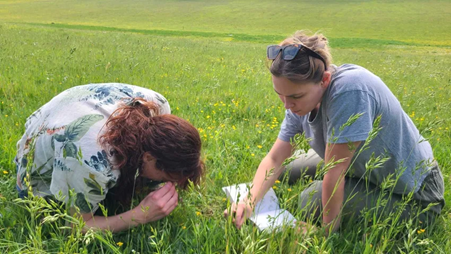
Members of the public can play an important role too. People are encouraged to look out for water voles and signs of American mink, and to report any sightings to local conservation groups or through national invasive species platforms such as INNS Mapper. Joining a local mammal group — like the Oxfordshire Mammal Group or Buckinghamshire Mammal Group, which run training sessions on mammal identification — is another great way to get involved. Volunteers can also support ongoing conservation work with River Thame Conservation Trust and BBOWT, helping to protect and restore the wildlife and waterways of the region.
The River Thame Conservation Trust is a grassroots charity that operates in Oxfordshire & Buckinghamshire that was formed in 2012 by a group of individuals who were passionate but concerned about the seemingly declining state of the River Thame.
We aim to work with local people in rural and urban parts of our catchment – volunteers, farmers and landowners – to improve biodiversity of the River Thame and its surrounding freshwaters and to improve public understanding, appreciation and enjoyment of the river catchment and its wildlife.
For further information and media inquiries, please contact:
Chels Hothem | chelsea@riverthame.org | 07912 669551


.jpg)
.JPG)