
A well-structured habitat management plan is essential for conserving and enhancing biodiversity. Below are the core components that should be included in any effective plan.
1. What Habitats Are Present?
Begin byidentifying and describing the broad habitat types found on the site. This may include:
- Grasslands, woodlands, wetlands, hedgerows, ponds, etc
- Notes on habitat condition, ecological value, and any notable features
You may find ituseful to categorise and describe the habitats using the Phase 1 or UK Habmethodology – these are standard methodologies that cover all different typesof habitats in the UK.
2. Locations and Areas
Clearly definethe spatial layout of the site:
- Describe where each habitat is located
- Include approximate sizes and boundaries
- Use consistent naming or zoning for clarity
3. Maps
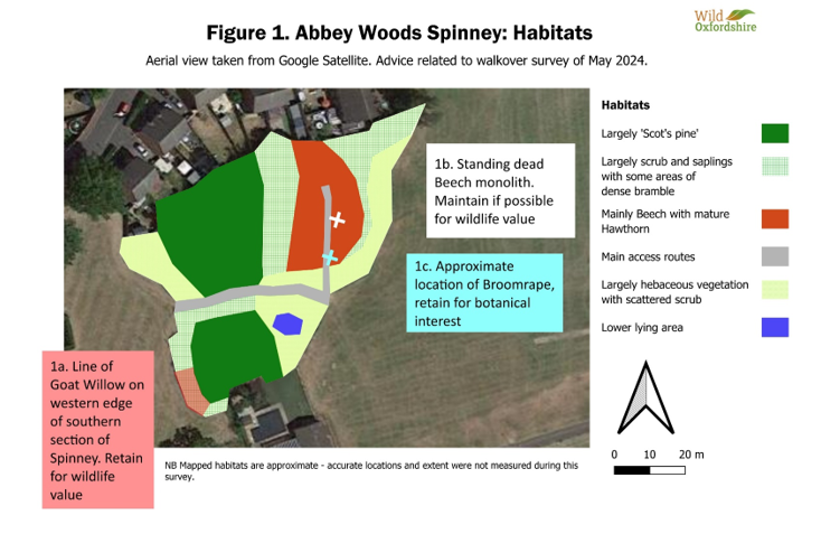
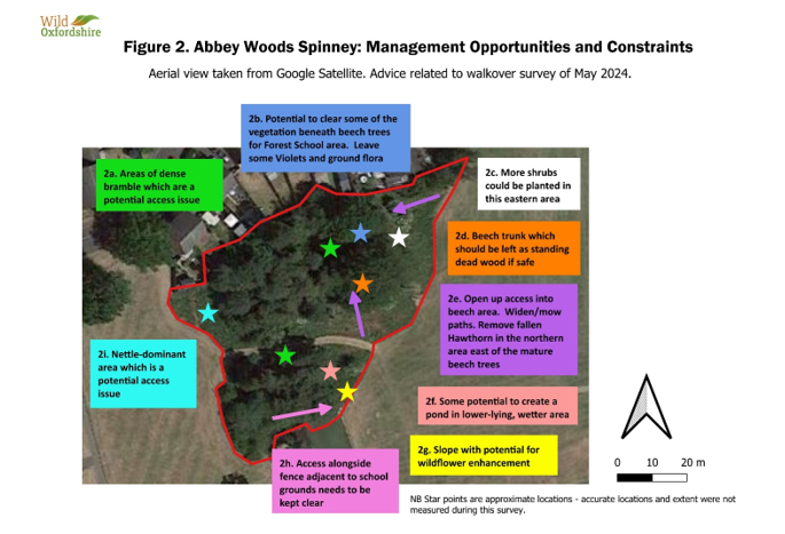
Maps are essential for visualising the site and planning management actions:
- Habitat maps show the distribution and extent of each habitat type
- Management maps indicate where and when specific actions will take place.
Some examples of these maps are below
1. Management Objectives and Proposals
Set out your goals for each existing or proposed habitat and explain the reasoning behind them:
- What are you aiming to achieve (e.g., increase species diversity, restore degraded areas)?
- Why are these actions necessary?
- How will they be implemented and maintained over time
Include a management work programme summarising the key information required to guide implementation. Additional maps can be included here to support the proposed actions.
2. Locations and Areas
Clearly definethe spatial layout of the site:
- Describe where each habitat is located
- Include approximate sizes and boundaries
- Use consistent naming or zoning for clarity
3. Maps
Maps are essential for visualising the site and planning management actions:
- Habitat maps show the distribution and extent of each habitat type
- Management maps indicate where and when specific actions will take place.
An example work programme;

5. Survey and Monitoring
'Survey' is the recording of qualitative or quantitative biological data using easily repeatable standardised techniques over a restricted period without preconception of the results . Undertaking surveys increases the understanding of species using the site.
'Monitoring' is the comparison of repeated surveys and is essential to evaluate the success of your management actions:
- Track changes in habitat condition and species presence
- Identify emerging trends or new habitat formations
- Gather other useful information, such as how people use the site
- Use data to inform future updates to the management plan
6. Additional Information (optional)
The following are examples of information which could also be included in the maindocument. This section encompasses supplementary material to the main text.
- Notes on potential threats or management challenges
- Current review of progress
- Expansion on any key findings
- References to relevant environmental policies or legal frameworks
- Possible future projects at the site
7. Appendix
Detailed relevant information can be included in an appendix/annex and be referred to or summarised in the main document. Examples of the supporting information which could go in this section include:
- Species lists and biodiversity records (survey results)
- Additional photographs of habitats and key species
- Licences or permits related to management
- Detailed work programmes and survey and monitoring schedules
- Additional maps


