
Many insects which feed on plant matter for all, or part, of their lifecycles have co-evolved to rely exclusively on specific native plant species. The exact percentage of these phytophagous (herbivorous) insects which rely on native plant species varies by insect group, for example, approximately 90% of moths and butterflies (Lepidoptera) rely specifically on native flora.
Data from the UK Centre for Ecology & Hydrology (UKCEH) demonstrates that while native plants typically support the highest diversity of British insects, non-native plants can also support unique assemblages, for example, in British gardens and when included in urban parks/ planting schemes. These greenspaces can provide food sources for UK phytophagous insects and pollinators where the natural environment is very fragmented1. See also research on generalist pollinators and how parks and gardens play an important ecological role, for example, the RHS Plants for Bugs Project2. This demonstrates that non-invasive, non-native plants, when thoughtfully selected in appropriate locations, can bolster nature recovery.
Insects historically seen as pests have lifecycles dependent on specific plants to lay their eggs on. Many of these plants are common species found in grassland within greenspaces, meadows, pastures, field margins, grassy woodland glades and verges. For this blog, I have focused on highlighting some common grassland larval plants and the insects they support.
Stinging Nettles are commonly found in areas of longer vegetation on green spaces, especially where the soil is damp and high in nutrients. Many people already know that these plants are important for Comma, Peacock, Red Admiral and Small Tortoiseshell. Several moth species are also dependent on Nettles, including the Spectacle Moth, Small Magpie and Moth-of-Pearl. However, these species are more likely to lay eggs on larger and younger patches of Nettles in sunny, sheltered locations. Nettles can be managed in a way to control dominance, whilst also retaining patches to benefit these Lepidoptera species.
Bird’s-foot Trefoil is another crucial foodplant for many species of insects, including Common Blue, Dingy Skipper and Green Hairstreak butterflies and over 60 moth species, as well as herbivorous beetles!3Bird’s-foot Trefoil thrives in nutrient-poor soils in shorter or medium length grassland due to its low-growing and mat-forming growth habitat. Planting this wildflower as a plug can be a more successful way to establish due to the tough, impermeable outer coat of the seed, which can cause seed dormancy.
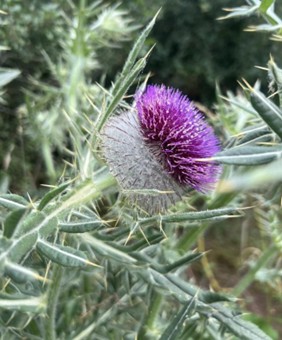
Woolly Thistle, along with other Thistle species, is a primary larval foodplant of Painted Lady butterflies. This plant is typically found on well-drained, nutrient poor soils - often on chalk and limestone sites. The Painted Lady is a migratory butterfly which arrives in the UK from Africa and Southern Europe and can be prolific in numbers in some years.
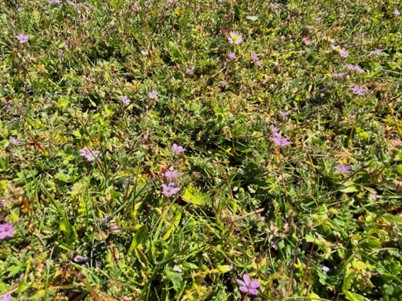
Common Stork’s-bill is a low-growing, sprawling plant often found growing in open, sunny ground in disturbed or sandy soils. It can adapt well to growing in regularly mown grassland. This plant is the primary larval food plant for several species of butterflies and moths, most notably the Brown Argus butterfly.
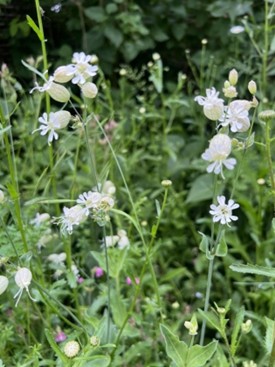
Bladder Campion is typically found growing in verges, at the edges of grassland or in disturbed ground in well-drained, nutrient poor soils. It is important for several moth species, particularly within the Noctuidae family, which includes The Campion (Sideridis rivularis) and Varied Coronet, typically feeding on the seed pods of the plant. This wildflower is also known for attracting night-flying moths.
Many of our native grass species support the life cycles of various insects, and this includes those often seen as ‘weed’ grasses for their vigorous growth. Yorkshire Fog, which is recognised by soft and velvety texture and purple-tinged flower heads, is an important foodplant for Marbled White, Small Skipper and Speckled Wood butterflies, and several moth species, including yellow Underwing, Dark Arches and Lunar Underwing. This highlights the importance of undertaking appropriate management to increase diversity of grassland flora, whilst accepting coarse grasses are natural components on many grassland habitats.
For more information about foodplants for Lepidoptera, seethe Butterfly Conservation website.
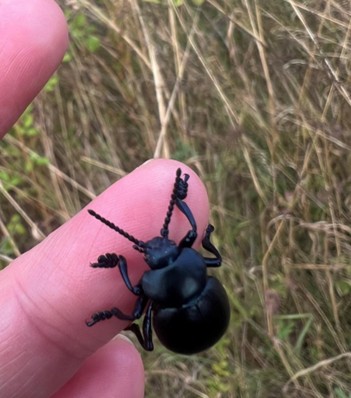
In the UK, thousands of beetle species have larvae that feed on living plants. The most notable groups include the Leaf Beetles (Chrysomelidae), Weevils (Curculionidae), and Chafers (Scarabaeidae). Their larvae eat various plant parts, including leaves, stems, flowers, and roots. The Bloody-nosed beetle - so-called because it produces a foul-tasting, blood-red liquid from its mouth and face as a defence mechanism- feeds on certain Bedstraw species. The larvae of this large beetle are typically found on Lady’s Bedstraw, Hedge Bedstraw and Crosswort. The adult is a slow-moving and flightless herbivore and typically found feeding on the same foliage.
1 Non-native plants provide habitats for variety of British insects | UK Centre for Ecology & Hydrology
2 Plants for Bugs - RHS science projects / RHS
3 Common Bird’s-foot Trefoil | Wildlife Gardening Forum


.jpg)