
February might be cold and miserable, rainy and grey, but Spring is just around the corner so now is the perfect time to plan out your garden. From which vegetable crops you want in rotation in your raised beds, to which perennials you are interested in purchasing to add colour to a border, there are always plenty of things to do, but now is also the time to think about wildlife and what you can add into your garden to help. Below are some suggestions for different tasks you could do this spring to help boost your local biodiversity.
Gardens take up a lot of space collectively - there are estimated to be 25 million gardens in the UK1! Gardens account for approximately 30% of urban areas 2, almost 5% of UK land mass 1, and this is a big area to make a positive difference for nature. The majority of people in the UK (84%) with access to outdoor space are already taking action to help wildlife 1.
Access to greenspace and engaging in gardening has been shown to improve our mental and physical health and wellbeing.
Gardens support nearly half of all UK birds, mammals, butterflies, reptiles and amphibians 1. Outdoor spaces, including gardens, parks, and balconies, can all help boost biodiversity – key to stable ecosystems. Biodiversity usually means species diversity, so the number of individuals and varieties of species. The higher the biodiversity, the more resilient our planet is to climate change, disease, and pollution. Wildlife and nature are key to our survival, including providing clean air, rainwater, food, medicines, and a stable climate.
This is all great in theory, but what can we actually see in our garden? It turns out, plenty! A major study of a back garden in Leicester found that over 30 years the space supported 2673 species 3. Some examples to look out for in your own garden include:
Pollinators
Butterflies – Painted Lady, Common Blue, Meadow Brown, Large and small white, marbled white
Moths – elephant and hummingbird hawk moths, scarlet tiger moth, silver-Y moth, brimstone moth, garden carpet moth
Bees – bumblebee, honeybee, solitary bees – ivy bee, leaf cutter bees
Mammals
Hedgehogs, foxes, badgers, bats, harvest mice, dormice
Reptiles
Grass snakes, slow worms, common lizards
Birds
Robins, blackbirds, collared doves, chaffinches, sparrows, finches, bluetits, woodpeckers, owls
Insects
Beetles and bugs – ladybirds, violet ground beetles, marmalade hoverfly, green lacewing, centipedes, millipedes
Help the birds:
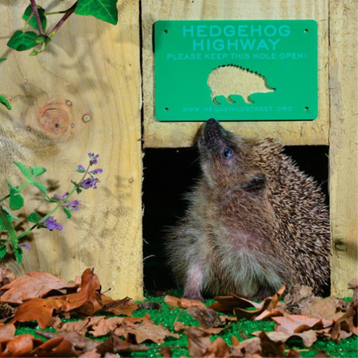
Support emerging hedgehogs:
Don’t forget the insects:
Plan for the spring and summer
Now is a great time to plan for what you could do in your garden to help wildlife over the coming year. Below are a few suggestions to add features and planting for a range of insects and animals. Happy planning!
Planting:
New features:
Advice and Resources - Freshwater Habitats Trust
Wildlife Ponds: How to Make Them | RHS Advice
Homemade Hoverfly Lagoons | Wildlife Trust for Beds Cambs & Northants
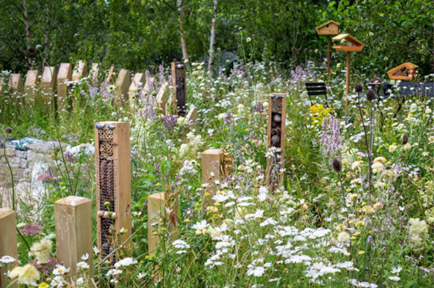
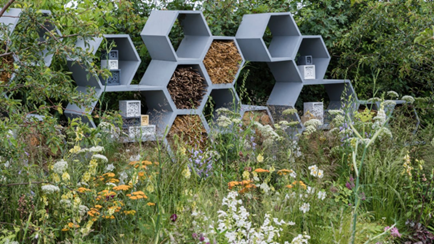
Bugs and beetles need a place to call their own in your garden, and creating a habitat for them using twigs, pinecones, and dried leaves is a great thing to install in the back of your garden. Many guides recommend using old pallets, but if you want a more polished look, consider building a bookshelf or an apothecary-style cabinet (or upcycling a second-hand one) and filling it. For solitary bees, consider adding a bee nest using different-sized hollow branches (such as hay or bamboo) to cater to the various bee species, or install a bee post in your flower beds using a piece of wood with a variety of hole sizes drilled into the sides
How to Make a Bug Hotel: DIY Bug Hotel Ideas
A brief guide to solitary bee nest boxes - Bumblebee Conservation Trust
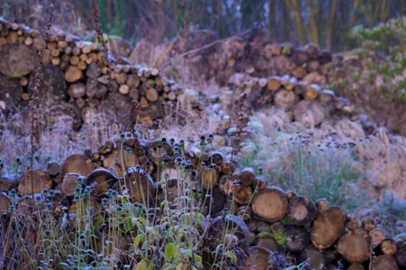
Dead Wood and Compost Heap Habitats | RHS Advice
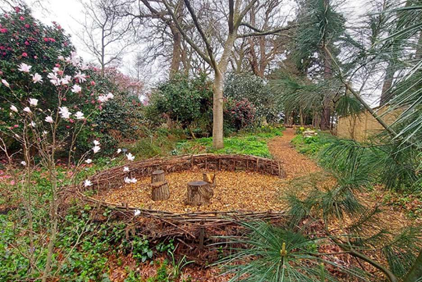
Change your routine:
Cut out the chemicals - Fewer than 1% of Britain’s insects are garden pests4, and many weeds are beneficial food sources for pollinators. Instead of adding polluting chemicals to our gardens, which harm wildlife, pose a risk to children, and pollute our groundwater supplies, try nonchemical controls, create a healthy garden ecosystem that will allow natural predators to keep your aphid numbers down, and embrace plant variety and flower richness as beautiful, even if it is unplanned! Non-chemical weed control | RHS Advice
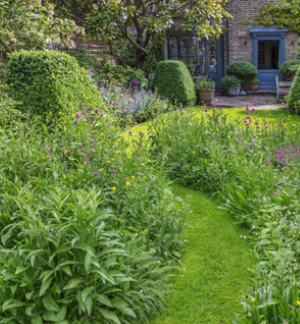
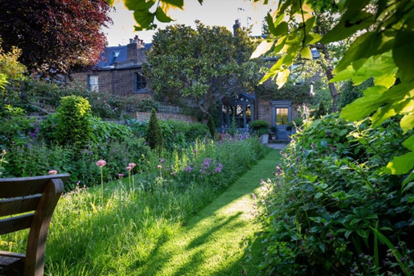
Change your mowing regime – As the warmer weather approaches, our grass will start to grow again, and everyone will be eyeing their lawnmowers. But reducing your mowing to once every two weeks rather than weekly can improve biodiversity in your garden. The time between mows allows flowering and increases the abundance of bees. Also consider adding in longer sections of grass into your garden design, either around the edges or in patterns, creating contrast and visual interest as well as space for wildlife.
Gardening for Wildlife I Wild Oxfordshire
Wildlife gardening | The Wildlife Trusts
Wildlife Gardening Forum - based in Oxfordshire
Gardening month by month | The Wildlife Trust of South and West Wales
What is biodiversity, and why is it so important? / RHS Gardening
RHS Gardening Report 2025 | UK trends and impact
Five myths of wildlife gardening, pitted against science / RHS Gardening
RHS State of Gardening / RHS Gardening
Footnotes:
1 The RHS State of Gardening Report (2025). The Royal Horticultural Society. RHS, London, UK. (Eds. Griffiths, A., Gush, M.B., Salisbury, A., Sutcliffe, C., Redmond, H., Sachs, A., Konyves, K.)
2 McLaughlin, C.L., Blanusa, T., Cameron, R., Lukac, M., Pfuderer, S. & Bishop, J. Actionable information and climate change awareness drive consumer selection of environmentally beneficial garden plants. Landscape and Urban Planning, 266 (2026), 105522.
3 Owen, J. (2010). Wildlife of a Garden: A Thirty-year Study. Royal Horticultural Society ISBN 978-1-907057-12-0.
4Wildlife in gardens / RHS Gardening


.jpg)